



































































How Over 230 First-Class Lecturers Exited UNILAG Within Seven Years- Ex-VC, Ogundipe Reveals

Why Over 230 First-Class Lecturers Exit UNILAG Within Seven Years, Ogundipe Reveals
No fewer than 239 first-class graduates employed as lecturers at the University of Lagos (UNILAG) have left the institution over a seven-year period.
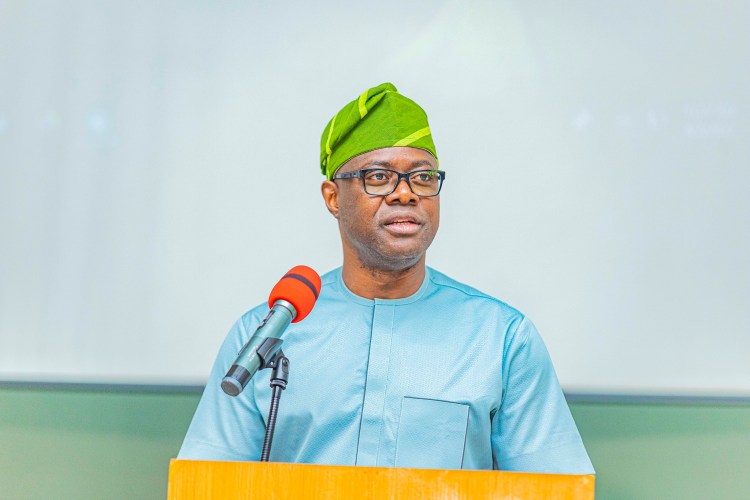
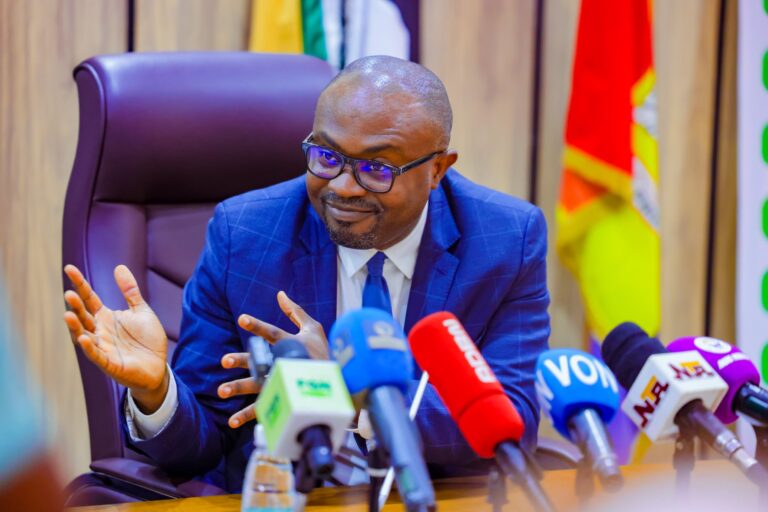
This was disclosed by the immediate past Vice-Chancellor of UNILAG, Prof. Oluwatoyin Ogundipe, during his guest lecture at The PUNCH Forum on Tuesday. Eagles Sight News gathers on Punch.
The event, themed “Innovative Funding of Functional Education in the Digital Age,” was held at The PUNCH Place along the Lagos-Ibadan Expressway.
Ogundipe shared that UNILAG had retained 256 first-class graduates as lecturers between 2015 and 2022, but by October 2023, only 17 of them remained employed at the university. He attributed this mass departure to inadequate pay, challenging working conditions, and low motivation among lecturers.
“At UNILAG, we decided that those with first-class honours should be employed. What is remaining is not up to 10 per cent. All of them have gone. One day, I asked the man in charge to give me this information.
“In 2015, 86 were employed; in 2016, 82; during my time, that is, 2017 to 2022, 88 were employed. As of October 2023, only 17 were on the ground. They have gone. Very soon, in the next 10 years, you will have only females in the universities if something is not done.”
He warned that unless the government increases funding for education, universities may be predominantly occupied by women within the next decade, while underprepared candidates could gain entry into postgraduate programs.
“Many of us are tired. By the time you get home, there is no light, and the Federal Government is saying they are giving us N10m to access as loans. You can see how our lives have been devalued. Can I use N10m to build a security post?
“How do you encourage them? Many of our colleagues, especially the young ones, are tired. The unfortunate thing is that two things will happen in the universities soon. Women will be the ones to occupy universities, like we have in secondary schools. Second, the calibre of people who will come for postgraduate studies will be people who are not supposed to come.”
Ogundipe highlighted the chronic underfunding of Nigeria’s education sector, noting that federal and state allocations have consistently fallen below 10 percent, which is far short of UNESCO’s recommended 15–26 percent. He urged lawmakers to legislate that each first-generation university receives at least N1 billion annually to address decaying infrastructure.
He also explained that many universities are forced to rely on Internally Generated Revenue, which ideally should be directed to research. As Pro-Chancellor of Redeemer’s University, Ede, Osun State, Ogundipe lamented that infrastructure, technology, staff remuneration, research support, and digital facilities are either overstretched or entirely absent in Nigerian universities.
“In the period from 2015 to 2025, Nigeria’s education sector has faced tremendous fiscal restraint. Federal budget allocations — even after headline increases in absolute naira terms — have consistently remained below 10 per cent, and most years hover between 4.5 and 7.5 per cent.
“The consequences of chronic underfunding are immediate and profound: Nigeria has the highest number of out-of-school children worldwide, estimated at between 10 and 22 million. Over 60 per cent of primary education funding is absorbed by teacher salaries, often with little left for capital expenditure or innovation.”
Ogundipe recommended exploring innovative financing methods beyond government allocations, including public-private partnerships, alumni endowments, philanthropy, education bonds, leveraging digital platforms, and linking funding to measurable outcomes.
“UNESCO positions innovative financing as a critical tool for bridging the nearly $100bn annual financing gap impeding educational attainment in low- and lower-middle-income countries.
“Innovative mechanisms for education include shared risk/reward models for infrastructure, investors repaid only if outcomes are achieved, risk capital to support EdTech and innovative schools, leveraging the Nigerian diaspora for targeted investments, debt swaps for education, education technology grants, corporate donations, and capacity-building linked to business and reputation.”
He further called on state and federal governments, the private sector, alumni, civil society, faith-based organizations, and donor agencies to support education.
“The private sector should see education support not just as social responsibility but as enlightened self-interest in building the workforce, the talent, and the markets of tomorrow. Invest not only in infrastructure, but in people, curricula, and research that advance national development.
“To alumni, home and abroad, remember that the institutions that made you now need you. Give, mentor, endow, advise, and advocate for your alma mater and the next generation.
“To civil society and faith-based groups, continue to be the vanguards of inclusion, equity, and grassroots school transformation. To the Nigerian media, lead the narrative, demand reforms, report boldly and analytically, and make education funding a national priority.
“To international and donor agencies, partner with us, but let us increasingly build our domestic resource mobilisation and institutional resilience. Above all, to every Nigerian, let us see education as the most sacred trust we must pass to our children. Our fingerprints, our footprints, our names should be found in the library buildings, the digital labs, the scholarships, and the lives changed.”
Among those in attendance from The PUNCH were Executive Director, Business Development and Innovation, Mrs. Valerie Omowunmi Tunde-Obe; Chairman, Editorial Board, Mr. Obafemi Obadare; General Manager, Production, Mr. Olayinka Popoola; and Manager, Advertisement, Mrs. Mary Ubani. Also present were Editor, PUNCH Digital, Mr. Lekan Adetayo; Deputy Editor, The PUNCH, Mr. Tana Aiyejina; Associate Editor, News, Dr. Ramon Oladimeji; and Head of Training, PUNCH Media Foundation, Mr. Dele Aina.