














































































Oyo Government Debunks SSACO’s Diphtheria Claims, Says No Confirmed Case

Oyo Government Debunks SSACO’s Diphtheria Claims, Says No Confirmed Case

The Oyo State Government wishes to make it unequivocally clear that there is currently no confirmed case of diphtheria in Oyo State. This fact stands in stark contrast to the misinformation being circulated by the Senator Sharafadeen Alli Campaign Organisation (SSACO), whose latest statement attempts to manufacture a public health crisis where none exists.
By making exaggerated outbreak claims and distorting immunisation data, SSACO has once again demonstrated a troubling willingness to spin information for political advantage, even at the expense of public safety.
According to surveillance information provided by the Honourable Commissioner for Health, Dr. Oluwaserimi Ajetunmobi, SSACO’s claim that diphtheria is affecting “several Local Government Areas” across Oyo State is entirely false.
SSACO listed 16 LGAs as affected, including Atisbo, Ibadan North West, Oyo West, Akinyele, Saki, Egbeda, Oriire, Ibadan North, Ibadan South West, Iwajowa, Ona Ara, Atiba, Lagelu, Ogbomosho North, Surulere and Oluyole.
However, official figures from the Ministry of Health’s Diphtheria Outbreak Surveillance Update for Epidemiological Week 40, 2026, show suspected cases in only 10 LGAs, with none confirmed. SSACO’s inflated geographical claims are therefore capable of causing needless public anxiety.
The Government notes, with concern, SSACO’s growing tendency to deploy misinformation in pursuit of political traction. Its latest claims follow a familiar pattern in which public health matters are distorted, data are selectively presented, and fear is manufactured to score political points. This behaviour is reckless, unbecoming of any organisation that claims to serve the public, and wholly unacceptable in matters as sensitive as disease surveillance and childhood immunisation.
Dr. Ajetunmobi further explained that, despite the absence of confirmed cases, the Ministry has taken all necessary preparedness and response measures.
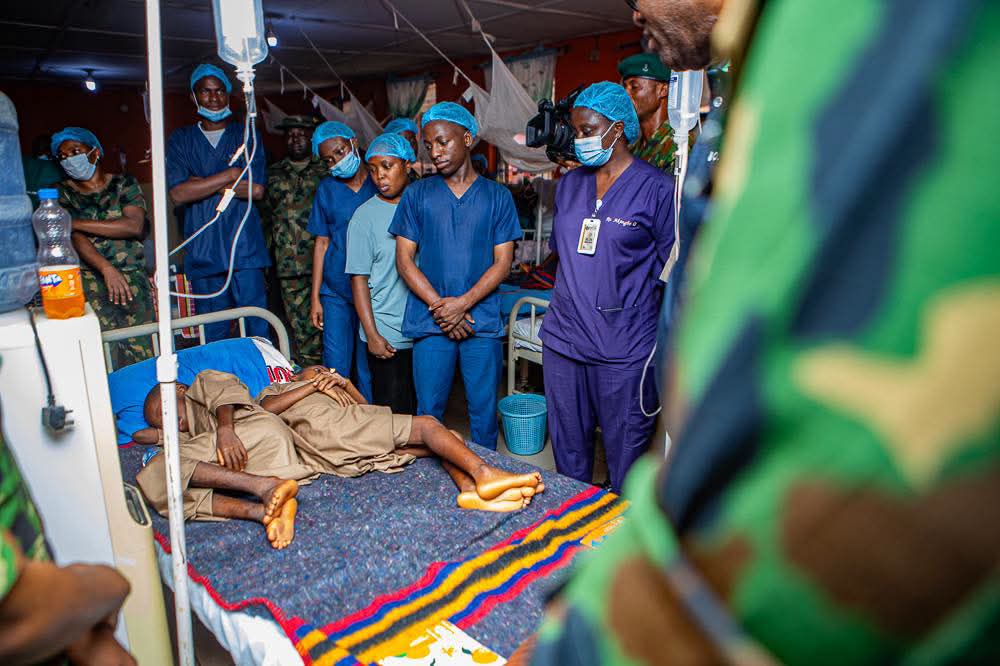
The Public Health Emergency Operations Centre has procured antibiotic supplies and requested buffer stocks of diphtheria antitoxin (DAT). Rapid response teams have been promptly activated for suspected cases in line with the 7-1-7 framework, while suspected cases have been isolated and treated at the Infectious Disease Centre, Olodo, using DAT and appropriate antibiotics.
These steps reflect a government that takes public health seriously and acts proactively to protect its people.
Equally misleading is SSACO’s claim that Oyo State ranks at the bottom of the South-West in childhood immunisation coverage. SSACO asserted that Oyo moved from 51.3 per cent in the 2024 NDHS to 55.0 per cent in the 2025–26 survey and therefore ranks last in the region.
This claim is false. Verified NmDHS 2025–26 data show that Oyo State’s basic antigen coverage is at the South-West average, while its national schedule coverage exceeds the zonal average. Among children aged 24–35 months, Oyo’s full national schedule coverage is above the South-West average.
According to the Government, SSACO’s figures are inaccurate, and the official data contradict its claim that Oyo State ranks at the bottom of the region.
The Government also notes SSACO’s attempt to portray Oyo State’s participation in the Immunisation Plus component of the IMPACT Project as evidence of failure. This is misleading. Participation in IMPACT is a fact, not an indictment.
SSACO’s own statement describes IMPACT as a multi-component project, yet it compares cumulative receipts against a single immunisation indicator in a manner that is analytically unsound. The funds received under IMPACT are not free money, and the Government maintains that they have been used strictly for their intended purposes.
If SSACO alleges mismanagement, it must specify what happened, where it happened, and how it happened, while presenting evidence rather than juxtaposing unrelated figures with unverified outbreak claims.
Regarding SSACO’s demand for the publication of IMPACT reports, the Government reiterates that the project’s financial and implementation reporting follows established audit and disclosure frameworks. The Ministry of Health welcomes scrutiny through appropriate channels, including the audit process.
Scrutiny is legitimate; using an unverified outbreak as a platform for political messaging is not.
In the end, the facts speak for themselves: there is no confirmed diphtheria case in Oyo State, the LGAs listed by SSACO are not supported by the surveillance data cited by the Government, and the immunisation figures it circulated are disputed by the Government’s interpretation of verified national statistics.
What the Government considers particularly troubling is SSACO’s decision to turn an unverified outbreak into a political tool, inflate the geographical scope of the claims, and manufacture rankings. Such conduct is reckless and deeply irresponsible.
Oyo State will continue to respond to every suspected case with urgency, protect every child through vaccination, and provide accurate, evidence-based information. What the Government will not do is allow public health matters to be twisted into instruments of political fear.
The people of Oyo State deserve clarity, not concoctions; facts, not fabrications. The truth is clear, the response is active, and the Government maintains that the falsehoods have been exposed.